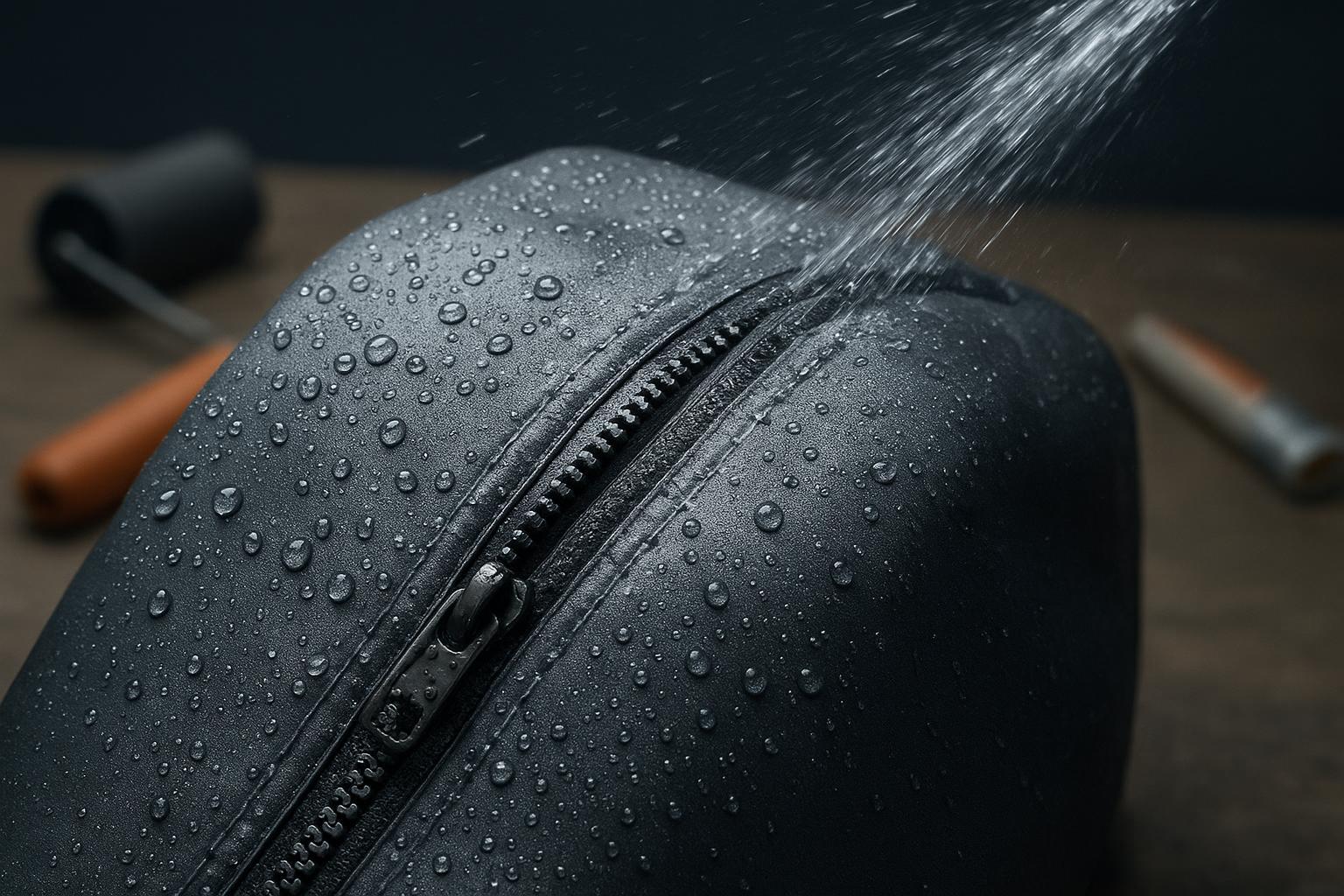
Nearshore and ship-deck environments punish zipper assemblies with spray, sun, grit, and frequent handling. If you’re buying or qualifying waterproof zippers for marine equipment covers and industrial shrouds, use this procurement quick reference to set clear, testable thresholds without over-specifying for deep submersion.
Key takeaways
- Focus your acceptance on abrasion as the primary differentiator. Specify Taber ASTM D3884 wheel, load, and cycles or ISO 12947 for assemblies.
- For covers exposed to spray and rain, IPX5 is the practical ingress target. Reserve IPX7 and IPX8 for immersion cases.
- Use xenon arc ISO 4892-2 or fluorescent UV ASTM G154 for weathering, but do not equate hours across the two methods.
- For corrosion screening, use zipper-specific ASTM D2059 when possible; ASTM B117 or ISO 9227 are acceptable with documented limits.
- Lock sampling and documentation with ANSI ASQ Z1.4 incoming QC and require parameterized test reports with photos.
How to scope performance for waterproof zippers for marine equipment covers
For nearshore covers, the right target is resistance to spray and jets, not submersion. The IEC ingress code for this scenario is IPX5, which evaluates hose-jet resistance. For method context, see the IEC’s catalogue page for IP codes in the official standard listing according to the IEC 60529 publication page. You can review the classification description via the authoritative source at the IEC webstore in the listing for the standard under the title IEC 60529.
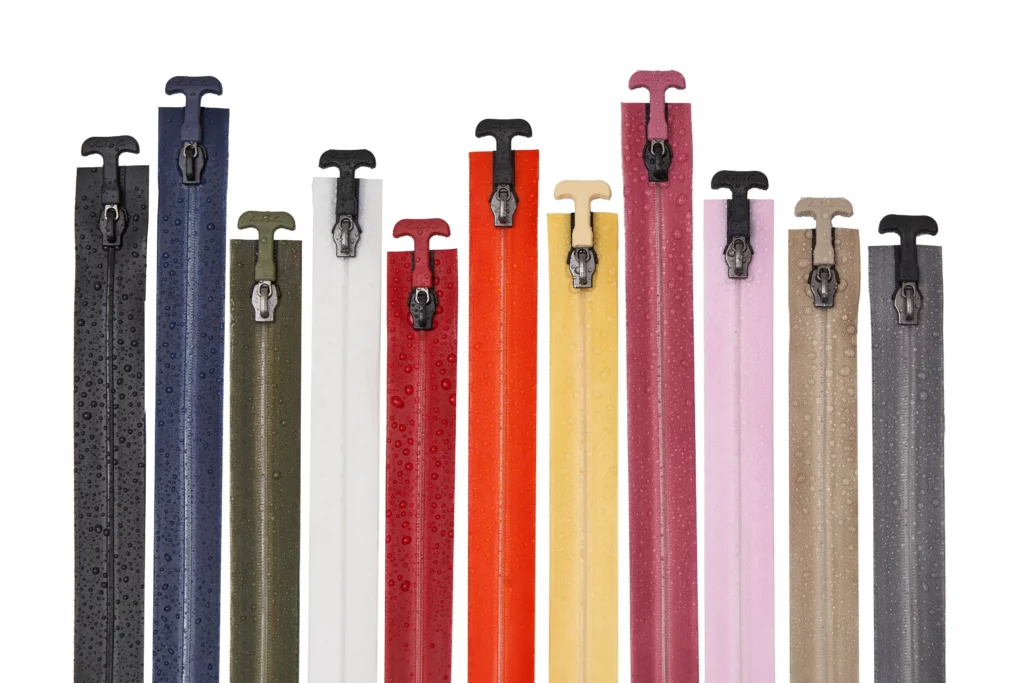
To understand how spray-rated zipper designs behave in practice, see the internal overview of waterproof zippers that explains TPU-coated sealing geometry, IPX5 use cases, and typical environmental ranges in the page titled Waterproof zippers overview at https://www.zizipper.com/waterproof-zippers/.
Here’s the deal: you’ll get the biggest quality spread in abrasion performance, so specify it precisely. UV and salt spray matter, but for nearshore covers they’re secondary screens that prevent early chalking or red rust rather than dictating full service life.
The procurement checklist
Below is a buyer-ready, pass or fail checklist aligned to nearshore decks. Copy these into RFQs, POs, and incoming inspections. Where ranges are shown, pick a value that fits your use profile and lock it in your PO.
| Area | Standard or method | Parameters to specify | Minimum threshold for nearshore use | Sampling and records | Result |
|---|---|---|---|---|---|
| Materials and construction | Supplier spec | TPU-coated polyester base tape; UV-stabilized yarns; slider and pull material and any anticorrosion coating | Materials declared and consistent with drawings and intended bonding process | Retain datasheet and lot traceability | Pass □ / Fail □ |
| Ingress protection spray | IEC 60529 IPX5 | Nozzle 6.3 mm, approx. 12.5 L/min, 2.5–3 m distance, duration per area with total ≥15 min; report all setpoints | No harmful ingress or functional impairment | Attach lab certificate referencing IEC 60529 publication | Pass □ / Fail □ |
| Abrasion primary Taber | ASTM D3884 | H‑18 wheel; 1000 g per arm; platform speed and vacuum noted; refacing frequency | ≥5,000 cycles to coating breakthrough with no yarn rupture and smooth zipper operation; consider ≥10,000 for heavier use | Report must show wheel, load, cycles, refacing, endpoint photos; test lab and date | Pass □ / Fail □ |
| Abrasion alternative assemblies | ISO 12947 Martindale | 12 kPa pressure; abradant per standard; endpoint definition | No hole ≥0.5 mm up to agreed rub count; appearance grade as specified if Part 4 used | Test report with rubs to endpoint and photos | Pass □ / Fail □ |
| UV resistance | ISO 4892‑2 xenon arc or ASTM G154 fluorescent UV | For xenon, state irradiance at 340 nm, black panel temperature, and cycle; for G154, state lamp type e.g., UVA‑340 and cycle such as 8 h UV and 4 h condensation | 500–1,000 h exposure with less than 20% loss of tensile or peel strength, no cracking or chalking, full operability | Include full cycle description and control setpoints in report | Pass □ / Fail □ |
| Salt spray and corrosion | ASTM D2059 zipper salt spray preferred; or ASTM B117 or ISO 9227 | 5% NaCl at 35 °C; hours to first red rust; whether a scribe was used | Coated metal sliders and pulls show no red rust up to 240–500 h; polymer teeth and tapes show no corrosion or coating delamination; retain photos | Photo documentation and component notes; state method edition | Pass □ / Fail □ |
| Mechanical strength | ASTM D2061 selected tests | Declare chain crosswise strength, slider pull-off, stop holding minima by zipper size | Meet or exceed buyer-declared minima suitable for cover size and load | Full D2061 report by test type and result | Pass □ / Fail □ |
| Cycle life function | Supplier declared method | Load, speed, and number of reciprocations | No binding or leakage growth after the declared minimum cycles for your use profile for example at least 1,000 cycles | Supplier test record and observation notes | Pass □ / Fail □ |
| Workmanship and protective features | Visual and dimensional checks | Uniform TPU lamination, tooth or coil alignment, clean heat seal at starts and stops, end-stop reinforcement, protective garage or flap at slider rest position | No critical defects; grit mitigation designed or documented maintenance guidance | Incoming visual audit with defect limits and photos | Pass □ / Fail □ |
| Documentation and traceability | Supplier and lab records | Method names and editions; all parameter setpoints; dated signatures; lot IDs | Complete and traceable record set per lot | Attach certificates and maintain in lot file | Pass □ / Fail □ |
| Sampling plan incoming QC | ANSI ASQ Z1.4 General Inspection Level II AQL 2.5 | Lot size, code letter, sample size, accept and reject numbers | Apply table values for your lot size and class of defects | Record code letter, n, Ac, Re and disposition | Pass □ / Fail □ |
References for standards and method context:
- For ingress classification context and official listing see the standard page titled IEC 60529 on the International Electrotechnical Commission webstore at https://webstore.iec.ch/en/publication/2452.
- For xenon arc method overview see the Q‑Lab summary page for ISO 4892‑2 at https://www.q-lab.com/weathering/weathering-test-standards/iso-4892-2 and for fluorescent UV see the page for ASTM G154 at https://www.q-lab.com/weathering/weathering-test-standards/ASTM-G154.
- For Taber abrasion method context see the Taber Industries rotary abraser platform overview at https://www.taberindustries.com/taber-rotary-abraser.
- For salt spray method context see the Q‑Lab summary of ASTM B117 at https://www.q-lab.com/corrosion/corrosion-test-standards/astm-b117 and zipper-specific ASTM D2059 listing at https://www.astm.org/d2059_d2059m-03r14.html.
- For acceptance sampling overview see the ASQ resource page titled Z1.4 and Z1.9 acceptance sampling at https://asq.org/quality-resources/z14-z19.
Notes that affect acceptance
- Taber comparability depends on wheel and load. Specify H‑18 vs H‑22 and the gram load. Require refacing frequency in the report to keep abrasivity stable.
- Xenon arc hours and fluorescent UV hours are not interchangeable because spectra and moisture delivery differ. Keep the method family fixed when comparing suppliers.
- Salt spray hours are a QC screen, not a life predictor. State whether a scribe was used and define “first red rust” for slider and pull surfaces.
- Photos matter. For abrasion and salt spray, require close-ups of endpoints and label each sample.
- Grit and silt cause binding. Specify protective garages or flaps and set maintenance intervals for cleaning if covers operate in sand-prone yards.
Example mapping using a neutral product reference
A TPU-coated zipper line that is spray rated at IPX5 and publishes abrasion and peel parameters can meet the nearshore checklist when reports include method details. For example, the AquaSeal Standard page provides published performance data that can be mapped to the thresholds above in a supplier qualification file. Review the product specification at the page titled AquaSeal Standard on ZIZIP to confirm IPX5 spray use and mechanical data at https://www.zizipper.com/waterproof-zippers/aquaseal-standard/.
PO and RFQ clause starters
Use or adapt the following boilerplate lines in your purchasing documents.
Abrasion — Taber
“Abrasion resistance per ASTM D3884 using H‑18 wheels at 1000 g per arm. Acceptance: ≥10,000 cycles to coating breakthrough; no yarn rupture; post-test operability verified. Report shall include wheel, load, cycles, refacing frequency, and endpoint photos.”

UV weathering
“ISO 4892‑2 xenon-arc, daylight filters, cycle and irradiance setpoint declared at 340 nm; black panel temperature controlled. Acceptance: <20% tensile or peel loss; no cracking or chalking after 500–1,000 h. Alternative: ASTM G154 Cycle 1 with UVA‑340 and the same acceptance. Methods are not to be cross-compared.”

Corrosion
“ASTM D2059 on complete zipper assemblies. Acceptance: no red rust or functional impairment on metal components after 240–500 h; photographic documentation required. Alternative: ASTM B117 or ISO 9227 on components with equivalent acceptance.”

Ingress protection
“IEC 60529 IPX5 hose-jet. Report nozzle ID, flow rate, distance, and duration. Acceptance: no harmful ingress and full operability.”

Mechanical strength
“ASTM D2061 methods for chain crosswise strength, slider pull-off, and stop holding. Supplier to declare minima appropriate to zipper size and prove by report.”

Sampling plan
“Incoming QC per ANSI/ASQ Z1.4, General Inspection Level II, AQL 2.5. Record code letter, sample size, accept and reject numbers, and lot disposition.”
When you actually need submersion ratings
If your cover faces immersion or pressure differentials, spray resistance is not enough. Specify submersion grades like IPX7 or IPX8 and consider hermetic sealing products. For a technical overview of airtight solutions and when they apply, see the page titled Airtight zippers overview at https://www.zizipper.com/airtight-zippers/.
Closing
Set abrasion precisely, hold UV and salt spray as disciplined screens, and document everything. If you need a sample incoming QC checklist or copies of method-parametered test reports mapped to this framework, contact ZIZIP through your sourcing channel for a neutral packet—no marketing fluff, just the evidence.