Heading out for casual kayaking or a weekend camp and just need fast, reliable guidance? This checklist prioritizes ease of use, splash protection, and the occasional dunk—so you can spec the right zipper quickly and confidently.
Key takeaways
- Choose sealing by IPX: splash (IPX4), heavy rain/jet spray (IPX5–6), or short submersion (IPX7). The zipper’s class doesn’t guarantee bag-level waterproofing—your seams and QA matter.
- Size by function: specify net opening length between stops, pick chain width (#5 for small pouches; #8 for medium duffels), and plan tape width per side for welding or sewing.
- Operability first: prefer resin/plastic slider bodies for salt use; pick locking only if you need it. Large, textured pullers make wet-glove access easy.
- Build for the process: confirm TPU-coated tape compatibility with RF/hot-air/heat-press bonding—or plan sewing allowances.
- Maintain it: rinse after salt, apply approved light lube at the docking end, and store dry/straight.
Pick your sealing target for waterproof zippers for dry bags
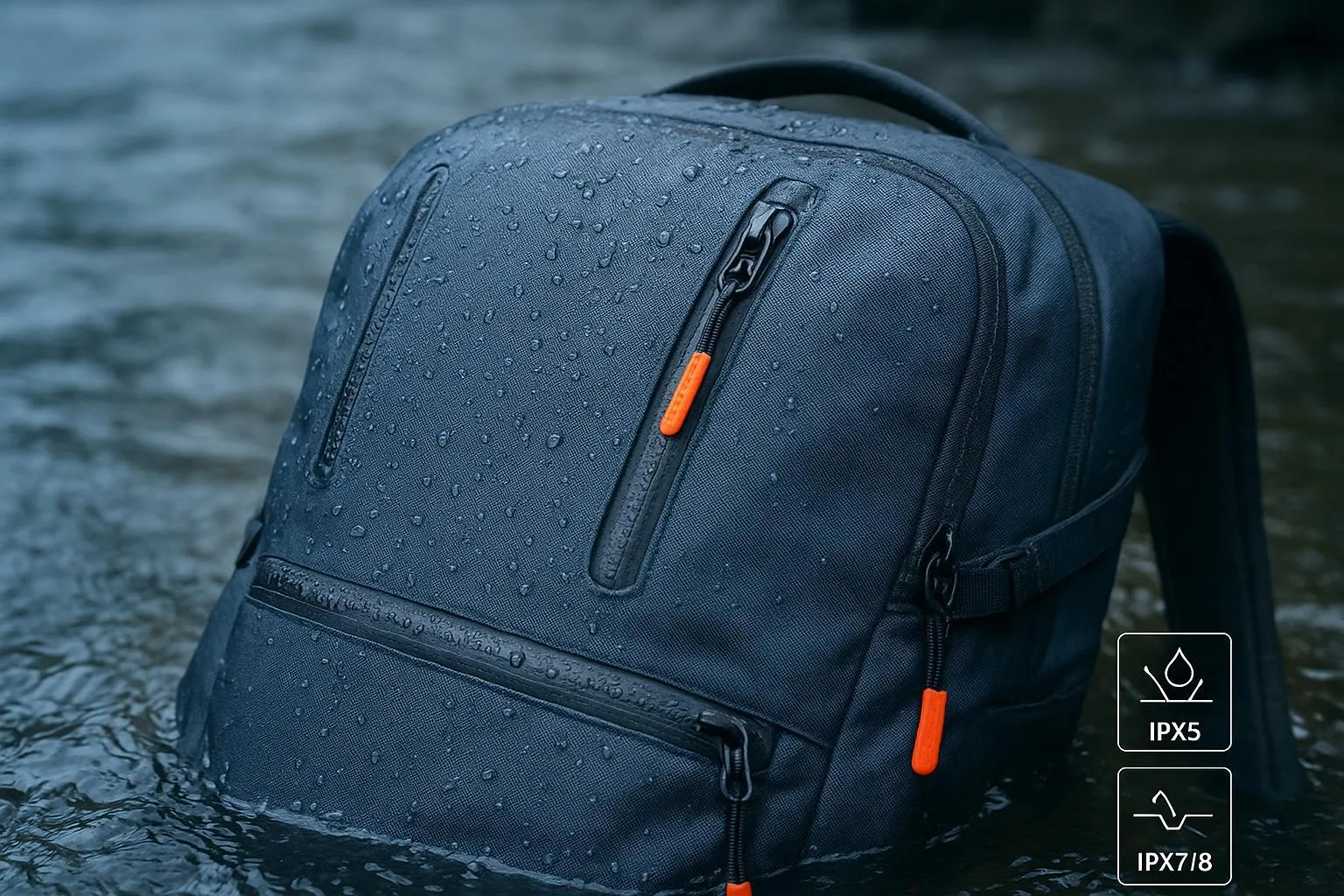
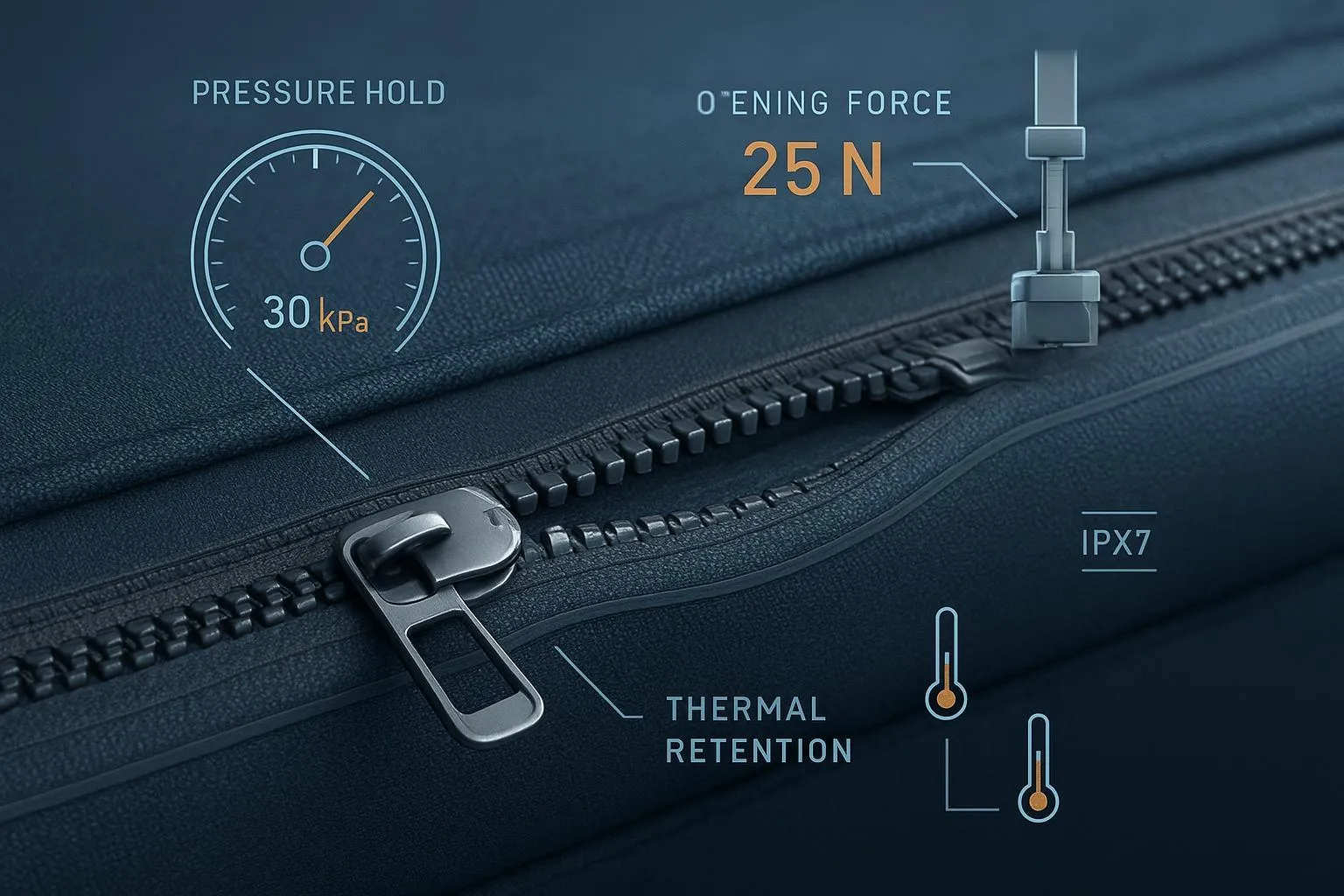
When you say “waterproof,” do you mean rain, spray, or actual dunking? Here’s the rule of thumb grounded in IEC 60529 summaries from test bodies. According to Intertek’s ingress protection overview (2025) and RS Components’ guide (2024), IPX4 resists splashes only; IPX5–6 handle water jets/heavy rain; IPX7 is for short immersion up to about 1 m for 30 minutes. See the class explanations in the Intertek summary and the RS Components reference for details: Intertek IP protection overview, RS Components IP ratings guide.
- IPX4: splash protection; fine for rain and spray on deck bags that won’t be dunked.
- IPX5–6: resists jets/wash-down; ideal for kayak deck bags and duffels that see heavy spray but not immersion.
- IPX7: short submersion; choose for dry bags that might fall overboard. Remember: component rating ≠ full-bag rating unless seams and end-stops are built and tested accordingly.
Measure the opening and choose chain and tape sizes
Fast specs beat guesswork. Measure the net opening length between stops (not overall tape length), then add a small allowance (+5–10 mm) to accommodate end-stop placement and seam take-up—validate on a prototype.
- Chain width: The “#” roughly matches closed tooth width in mm (#5 ≈ 5 mm; #8 ≈ 8 mm). #5 suits small dry bags and deck pouches; #8 adds stiffness and durability for medium duffels.
- Tape width per side: plan for roughly ~32 mm on #5 and ~38 mm on #8 as a design placeholder; verify exact dimensions on your chosen waterproof or airtight model before cutting.
| Bag type/use | Recommended chain size | Typical tape width per side | Notes |
|---|---|---|---|
| Small dry bags, kayak deck pouches | #5 | ~32 mm (≈1.25 in) | Favor easy pull and glove-friendly access |
| Medium duffels, backpack main openings | #8 | ~38 mm (≈1.5 in) | Adds stiffness and durability |
Choose slider type and body material for wet-glove use
You’ll operate this zip with wet hands. Aim for low effort and corrosion resistance.
- Locking vs non-locking: Auto/top-lock sliders hold position; non-locking can feel smoother for quick access. Pick locking only if the opening must stay fixed.
- Body material: In salt environments, prefer resin/plastic or well-coated sliders to reduce corrosion risk. Metal can seize if neglected. Smooth action plus light, approved lubricant improves longevity.
Select pullers that work with wet hands
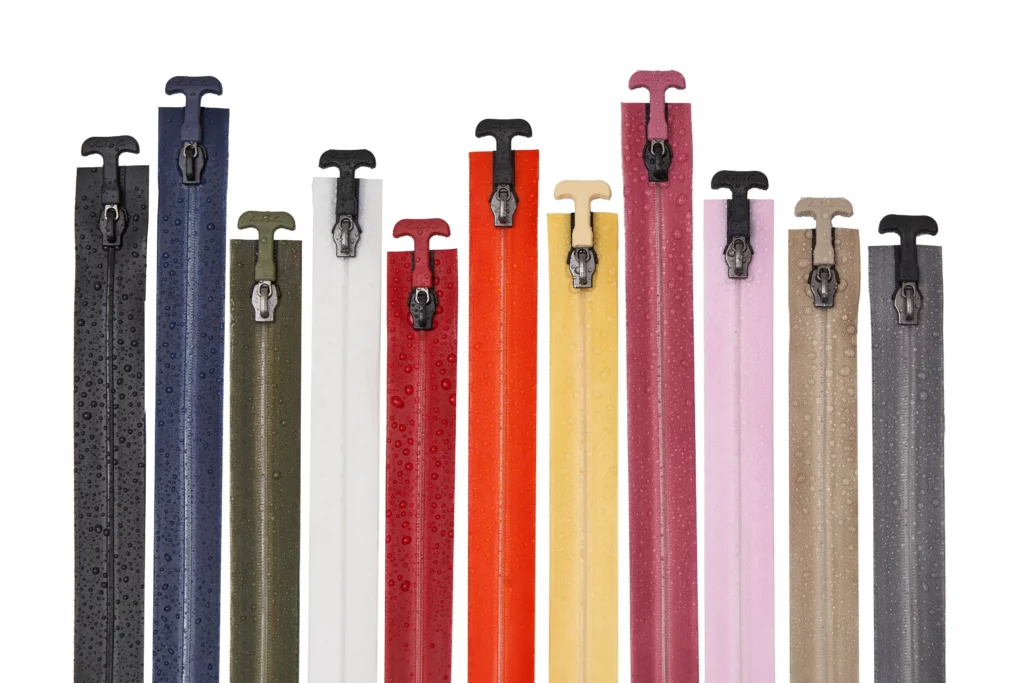
Small tabs are a pain with wet gloves. Choose large molded toggles or cord loops—an easy win when specifying waterproof zippers for dry bags intended for weekend use.
- Loop size: 6–8 mm cord with a textured or rubberized toggle is a practical field choice.
- Shape: Oversized oval or T-shaped pulls improve grip and reduce awkward force angles. Think of it this way: bigger, grippier pulls equal fewer fumbles when the water’s choppy.
Confirm end style and decide on dual sliders
Match end configuration to how the bag opens and how you access gear.
- Closed-end suits sealed duffels and dry bags; open-end (separating) is less common for immersion-focused builds.
- Dual sliders enable access from either direction or at a midpoint—useful on deck bags. For splash‑resistant waterproof zippers, see the AquaSeal Standard overview.
Check welding or sewing compatibility
TPU-coated tapes typically pair with RF/high-frequency welding, hot-air welding, or heat-press bonding—when matched to compatible coated fabrics. Confirm with your supplier for temperature, dwell, and pressure windows, and always prototype. If you’ll sew, plan seam allowances and consider protective over-flaps in high-wear zones for waterproof zippers for dry bags and duffels.
Care basics to keep seals working
A little care goes a long way. Rinse after salt exposure, clean gently, and apply only the manufacturer-approved light grease at the docking end if specified. TIZIP’s handling notes (2025) are representative of watertight-zipper care guidance, and YKK’s care page offers similar advice: TIZIP handling recommendations, YKK care for AquaGuard/AquaSeal.
Example spec for a 20–35 L weekend dry bag
For a mid-size dry bag that might be briefly submerged, you could specify: chain #8 with TPU-coated tape (~38 mm per side planned), net opening length measured between stops (+5–10 mm allowance validated by prototype), resin body non-locking slider, and large molded pullers. For submersion-capable components, an airtight zipper such as the AeroSeal Dual‑Slider targets an IPX7 class at component level; full protection depends on welded seams and QA.
Next steps: For more checklists and sizing notes, see the ZIZIP News hub.