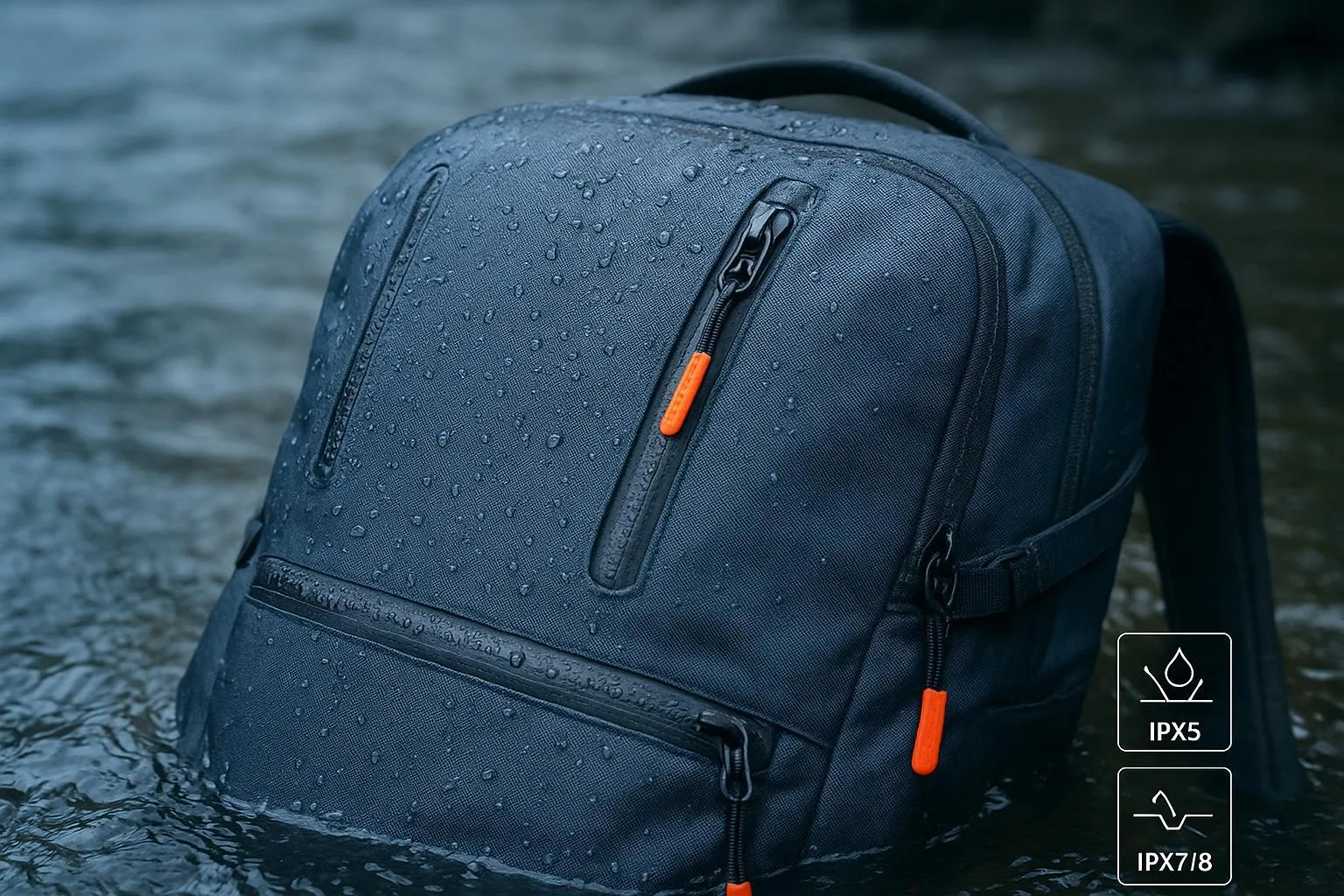
When diving-suit zippers fail, they rarely fail politely. The most common field complaint after a few trips in salt water is a slider that binds or needs two hands to move. This purchasing quick reference is designed to prevent that single failure mode—post‑corrosion seizure and force spikes—while giving procurement and incoming QA a tight, custom OEM baseline you can apply the day product arrives.
Key takeaways
- Define function after corrosion, not just “hours in chamber”: measure operating force before and after neutral salt spray and set a maximum allowed increase.
- Set an OEM bend‑radius method at −10 °C to catch TPU micro‑cracks and tape delamination before garments are built.
- Use IPX7/IPX8 concepts as practical leak checks at subassembly or system level; document depth/time or pressure clearly.
- Keep acceptance measurable: no red rust on stainless, no binding across full stroke, post‑corrosion force increase ≤ a chosen percentage (example: 30%).
- Document sampling, fixtures, and pull speed so different inspectors get the same result.
What to verify on arrival (materials and construction)
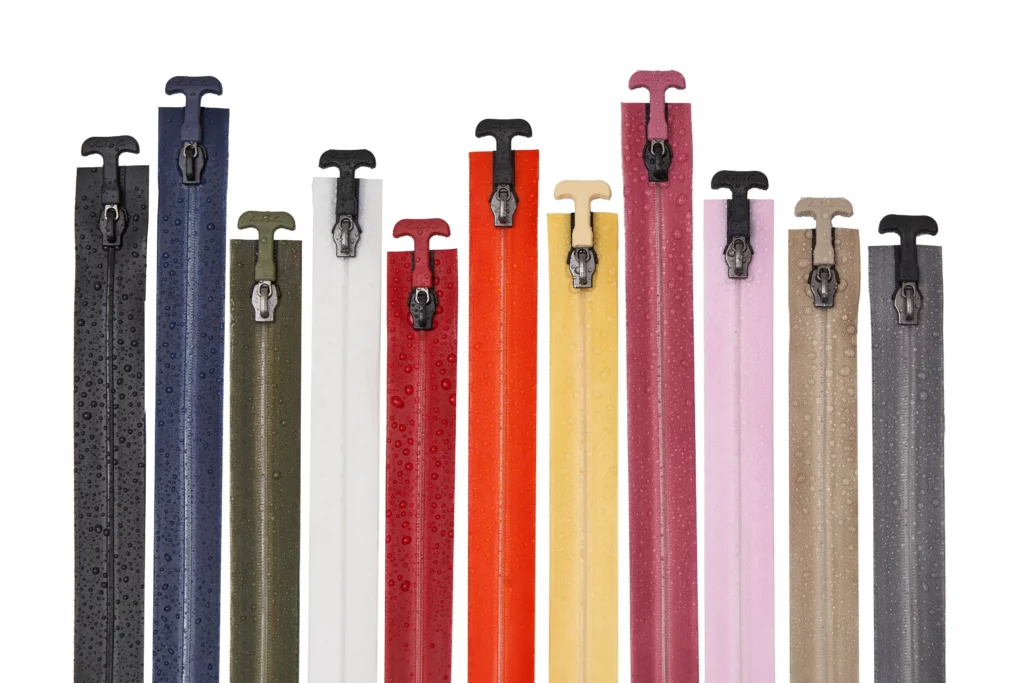
Start with a short visual and dimensional review. Confirm the zipper type (airtight vs waterproof) matches the drawing and garment intent. Inspect TPU coating continuity on tapes and sealing surfaces under bright light; pinholes or “orange peel” near the chain line are grounds for hold. Check slider metallurgy: marine‑grade stainless or proven anti‑corrosion coating, free of burrs and sharp edges that can cut TPU. Record tape width, chain size, end‑stop integrity, and any lubricant presence specified for saltwater use. These simple checks remove the worst outliers before you spend chamber time.
Salt spray and post‑corrosion operation (ASTM B117 / ISO 9227)
Neutral salt spray (NSS) is a comparative corrosion screen: 5% NaCl, 35 °C, collected fog pH 6.5–7.2, deposition about 1–2 mL/h per 80 cm²—standardized in both the American and international practices. See the condensed method overviews for ASTM B117 parameters and ISO 9227 NSS. Because B117 is not predictive by itself, judge function after exposure; industry guidance highlights these limitations of salt spray as a predictor.
Practical OEM baseline for diving‑suit components:
- Exposure band: 48–96 h NSS depending on slider material/treatment.
- Recovery: Rinse off loose salt, then condition 24 h at 23 °C/50% RH before measurements (a common stabilization practice in corrosion testing).
- Acceptance: No slider seizure or binding; no red rust on stainless components; cosmetic white corrosion on coated parts only within your visual guide. Measure operating force and apply your delta limit (example: ≤ 30% increase vs. baseline and still ≤ your absolute max).
Bending radius and low‑temperature flex (−10 °C mandrel method)
Most zipper standards don’t specify a bend radius for coated, airtight designs. So set your own OEM method that reflects your garment routing. Condition samples at −10 °C for 24 hours. Immediately bend the closed zipper 180° around a cylindrical mandrel that represents your proposed minimum radius, repeat five times along the most curved segment, then operate the slider through the full stroke. Acceptance: no visible TPU whitening, cracking, or delamination and smooth, full‑length operation. Think of this as a “cold‑curve reality check” to protect against hidden tape damage that shows up only after first dives.
For engineers refining pattern paths and bend geometry, consider formalizing radius assumptions in drawings and work instructions so procurement and QA can test to the same target. If you need a deeper design primer on routing and path decisions around closures in technical garments, a practical engineering article can help align teams.
Leak/ingress surrogates for drysuits (IPX7/IPX8 concepts)
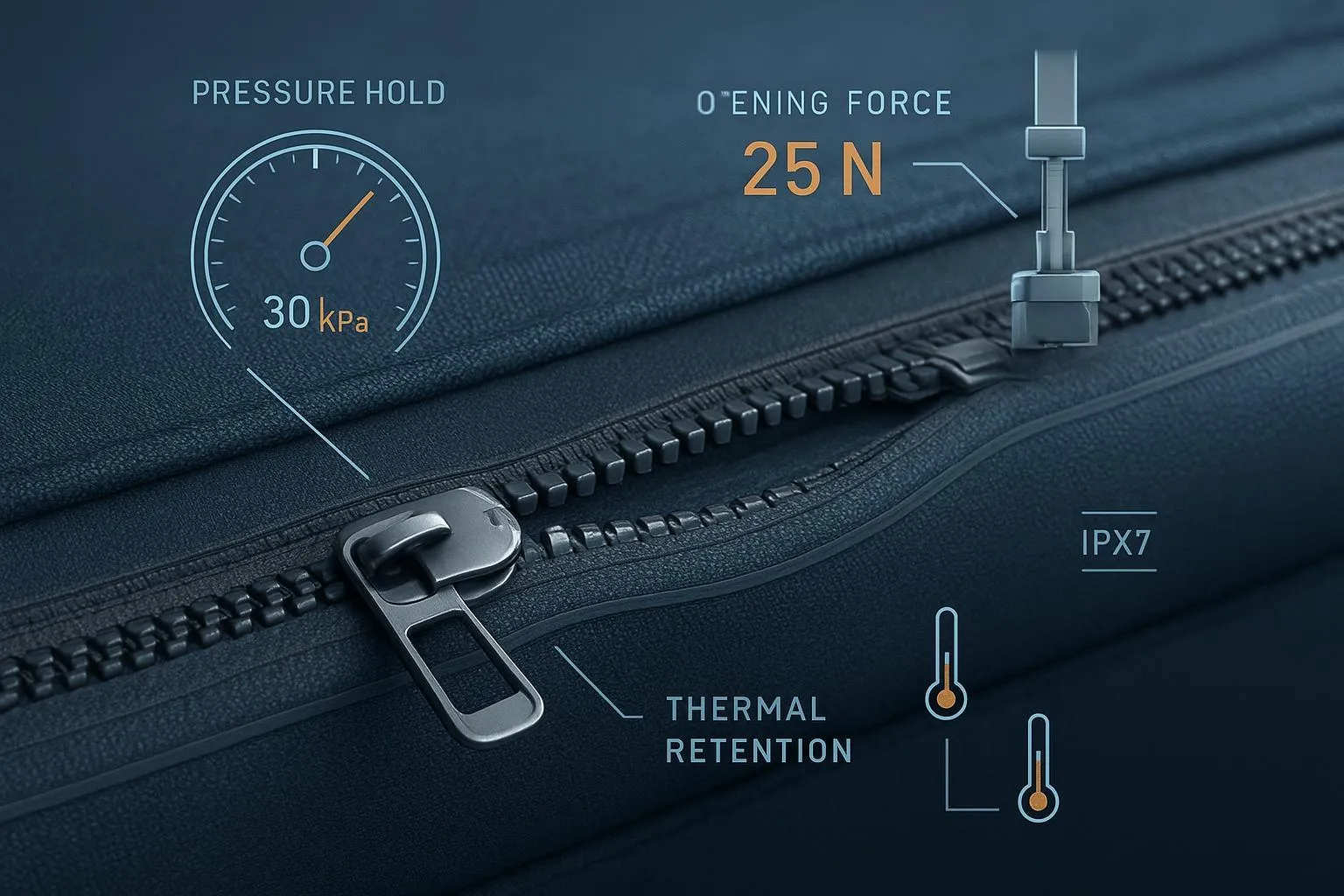
Ingress ratings provide a clear yardstick for subassembly or whole‑garment checks. IPX7 is 30 minutes of immersion at approximately 1 m; IPX8 means deeper/longer by agreement. Use these as surrogates to define water‑tightness checks for your zipper assemblies or finished suits, e.g., “3 m equivalent for 30 minutes, no ingress,” or run a pressure‑decay test at 50–100 kPa with a documented allowable loss. See a concise overview of IPX7 vs. IPX8 immersion criteria. Decide up front which method (immersion or pressure) you’ll apply, and state the pass/fail in your acceptance sheet.
Operating force: how to measure and judge — diving suit zipper OEM checklist focus
Because no open, universal standard prescribes a glide‑force pull speed for airtight zippers, define one. Mount a representative length in a simple fixture that keeps the pull angle consistent. Pull the slider at a constant rate (commonly 100 mm/min works well) and record steady opening and closing forces. Capture a clean baseline on five virgin samples before any aging. After salt spray and low‑temperature bends, repeat measurements and compute the percent change.
OEM example bands you can adopt and then tune with pilots:
- Target baseline band: 15–55 N depending on size (set your own absolute maximum for ergonomics, e.g., ≤ 70 N).
- Post‑aging limit: increase ≤ 30% vs. baseline and still ≤ your absolute max.
- Functional requirement: full‑stroke travel with no stick‑slip that demands “jerk” pulls.
One‑page Go/No‑Go table for your diving suit zipper OEM checklist
| Checkpoint | Method snapshot | Acceptance (OEM baseline example) |
|---|---|---|
| Visual & dims | Bright‑light inspection; measure tape width/chain; check end‑stops | TPU coating continuous; no burrs; materials match drawing |
| Baseline force | Constant‑rate pull at 100 mm/min; 5 samples | Mean within 15–55 N; no pronounced stick‑slip |
| Salt spray | ASTM B117/ISO 9227 NSS; 48–96 h; 24 h recovery | No binding; no red rust on stainless; white corrosion within guide |
| Post‑corrosion force | Repeat 100 mm/min pull | Increase ≤ 30% vs. baseline and ≤ absolute max (e.g., 70 N) |
| Low‑temp bend | −10 °C for 24 h; 180° over mandrel; 5 bends | No TPU cracks/whitening/delam; full operation |
| Leak surrogate | Immersion 3 m/30 min or 50–100 kPa pressure‑decay | No ingress or decay beyond OEM limit |
| Cycles/Durability | Ambient cycling on 1 sample per lot | 1,000 open/close cycles with no binding; leak criteria still met |
| Sampling & AQL | ISO 2859‑1 or ANSI/ASQ Z1.4 | Define AQL (e.g., 1.0% critical); lot traceability captured |
Sampling, documentation, and handling
Choose an attribute sampling plan (ISO 2859‑1 or ANSI/ASQ Z1.4) aligned to risk—common practice is AQL 1.0% for critical, 2.5% for major. On each lot’s acceptance sheet, capture the lot number, coating/plating certificates, and the exact test settings used: chamber set‑points, recovery time, pull speed, mandrel diameter, and leak test method. For handling, specify salt‑safe lubricant type if used, protective caps or trays to prevent kinks, and storage temperature limits to protect TPU integrity. If you need more background on airtight versus waterproof zipper use cases and IP ratings, a short overview can help align teams working on standards and acceptance.
Practical example (disclosure)
Disclosure: ZIZIP is our product.
A concise workflow we’ve seen succeed for diving‑suit programs: establish a five‑sample baseline glide force at 100 mm/min, run 48 h neutral salt spray with a 24 h recovery, then re‑measure glide force and perform a −10 °C/24 h mandrel bend followed by full‑stroke operation and a 3 m/30 min immersion check. Airtight zipper designs intended for drysuits are commonly validated with this exact sequence; if you maintain the “≤ 30%” post‑corrosion force change and require no binding or red rust on stainless parts, complaint rates for slider seizure tend to drop sharply. For product context on airtight applications and IP ratings, see the overview of airtight zipper use cases on the ZIZIP site: Airtight Zippers — applications and ratings.
Next steps
Need a one‑page acceptance sheet and data‑entry template you can adapt? If you’d like our OEM checklist and lab worksheet files (PDF/Excel) shared for reference, contact us and we’ll send the current versions.