Field leaks don’t start as big failures. They begin as tiny abrasions, a nicked seal lip, or a rough guide rail that grows worse with every sandy beach entry and salt bath. The good news? Most dry diving suit zipper leaks are preventable when you align smart design choices with disciplined installation and a maintenance routine you can actually follow.
This guide focuses on the failures you see most in the field—abrasion from sand, salt, and chemicals; seal-lip damage; and guide-rail wear—then ties them to practical design, installation, and maintenance controls you can implement today. You’ll also get simple test methods and acceptance thresholds so your team can say “pass/fail” with confidence.
Key takeaways
- Most drysuit zipper leaks trace back to maintenance-related wear; design and installation can reduce the rate at which that wear accumulates, but they don’t replace routine care.
- Use IPX-style immersion checks (IPX7 intent) as planning references and validate your own test depth/time locally; confirm standards context via the UL summary of IEC 60529 to align terminology.
- Clean with freshwater, a soft brush, and mild soap; avoid solvents/abrasives that damage TPU coatings and seals; lubricate sparingly at docking ends.
- Track operating feel with a handheld force gauge; when baseline drift exceeds about ±20% across routine cycles, inspect for contamination, lip wear, or rail damage.
- Document installation with alignment controls, end-stop reinforcement, and verified adhesive/weld parameters; consult your vendor for production tolerances.
What Fails First in the Field
Let’s start with the most frequent root causes.
Abrasion from sand, salt, and chemicals scratches and pits the sealing surfaces and rails. Sand acts like grinding media; salt crystals harden as they dry and can embed in the chain. Many general-purpose solvents pull plasticizers from TPU coatings and seals, which accelerates brittleness and micro-cracking. The early symptom you’ll notice is a zipper that feels “dry” or scrapes in specific segments. If you see white residue along the rails after drying or feel gritty motion, contamination is already compromising the sealing interface.
Seal-lip damage often begins as a tiny nick from debris or rushed handling while open/closing under load. A small cut in the lip or docking area disrupts compression and creates a capillary path. You may see localized bubbling in a soap test or a faint water line after an immersion check. Nicks also collect grit, accelerating wear.
Guide-rail wear shows up as asymmetry: one rail looks polished while the other remains matte, or you notice angular pull marks. This usually points to misalignment during installation or habitual angled operation in the field. Over time, the slider will bind intermittently, and sealing pressure becomes uneven.
The thread tying these together is simple: contamination plus mechanical stress create localized damage that defeats an otherwise sound sealing design.
Design Choices that Reduce Wear
You can’t design away neglect, but you can make the system more tolerant of the real world.
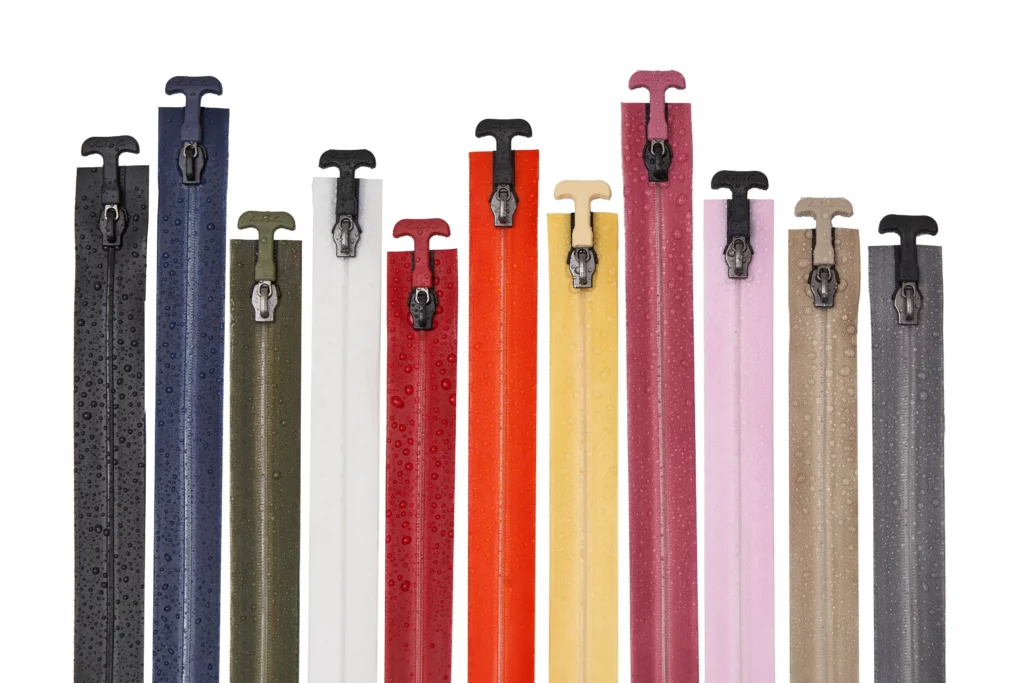
- Choose TPU-coated waterproof/airtight zipper systems that are known to resist hydrolysis and moisture aging; they maintain elasticity and sealing pressure better when cared for properly. Overflaps that shield the chain from sand splash dramatically reduce debris ingress.
- Reinforce end stops and docking areas. The opening/closing transition concentrates load; spreading that load with pattern reinforcements and backing tapes reduces micro-movement and lip scuffing.
- Keep zipper paths straight where possible and avoid sharp radii near docking ends. Curves introduce angular slider motion that scours rails.
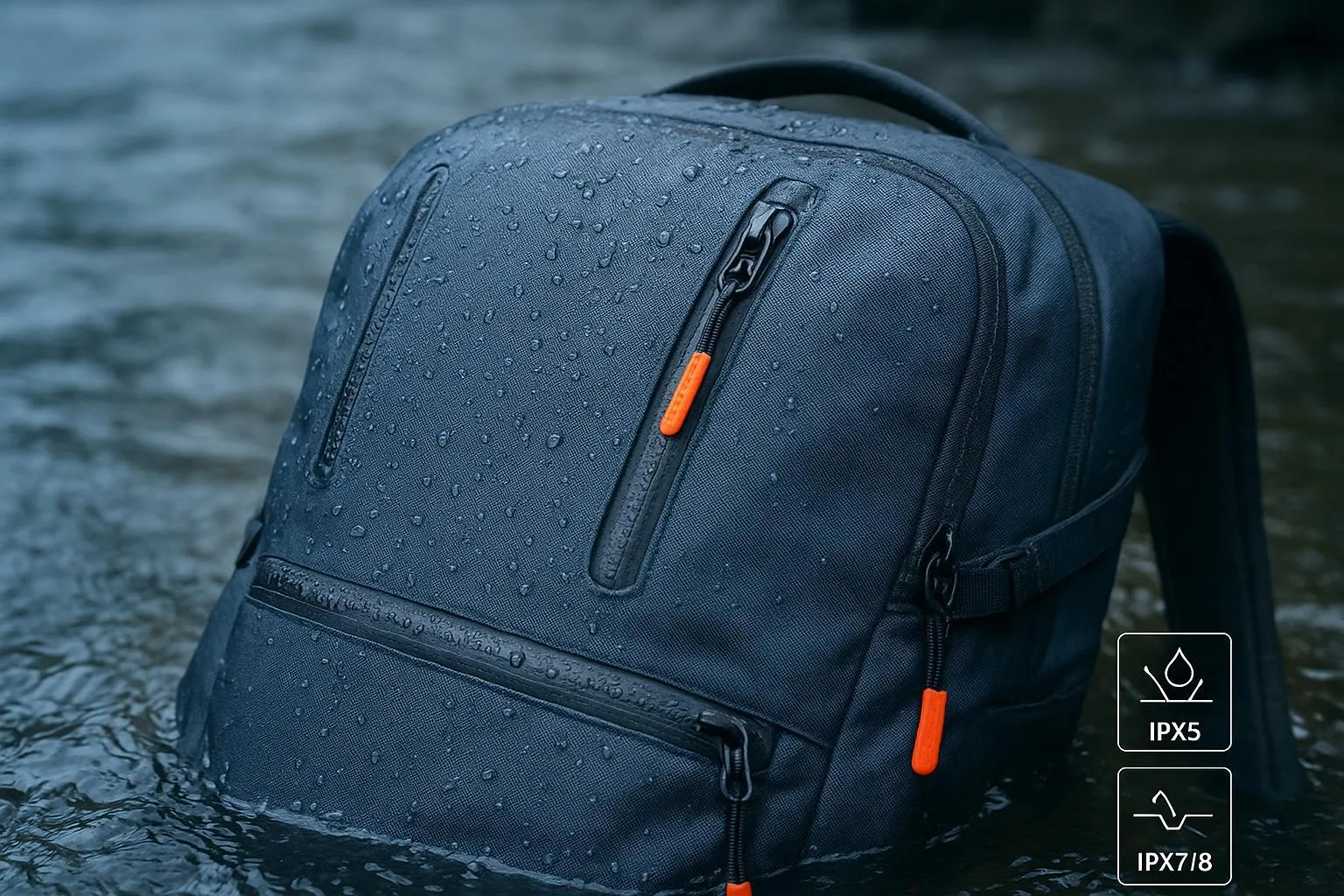
- Align your test vocabulary with IPX. An IPX7-style immersion reference means temporary immersion at roughly 1 m for about 30 minutes; IPX5 refers to water jets. For planning and training teams on what “pass” means, leverage the clear terminology in the UL overview of IEC/EN 60529 so everyone is speaking the same language. See the summary in the UL Environmental Simulation Testing page describing IPX5, IPX7, and IPX8 intent in the context of IEC 60529: UL’s environmental simulation overview referencing IEC/EN 60529.
Installation Controls You Shouldn’t Skip
Great components can still leak if assembly quality drifts.
Use alignment jigs whenever you sew, weld, or bond the zipper into the suit shell. Document the centerline, measure offset to the shell seam at several stations, and record results on a build sheet. As an internal starting point (not a universal spec), many shops target visual alignment within roughly ±0.5–1.0 mm across the visible run; you must validate your tolerance with your zipper vendor and fabric stack-up.
End-cap bonding quality and end-stop reinforcement deserve extra attention. Bond lines should be continuous, with consistent bead geometry and no dry spots. After cure or weld, perform a gentle flex-and-feel check around the docking area to confirm the lip isn’t being pinched, and operate the slider straight—never at an angle—to seat the seal without scuffing.
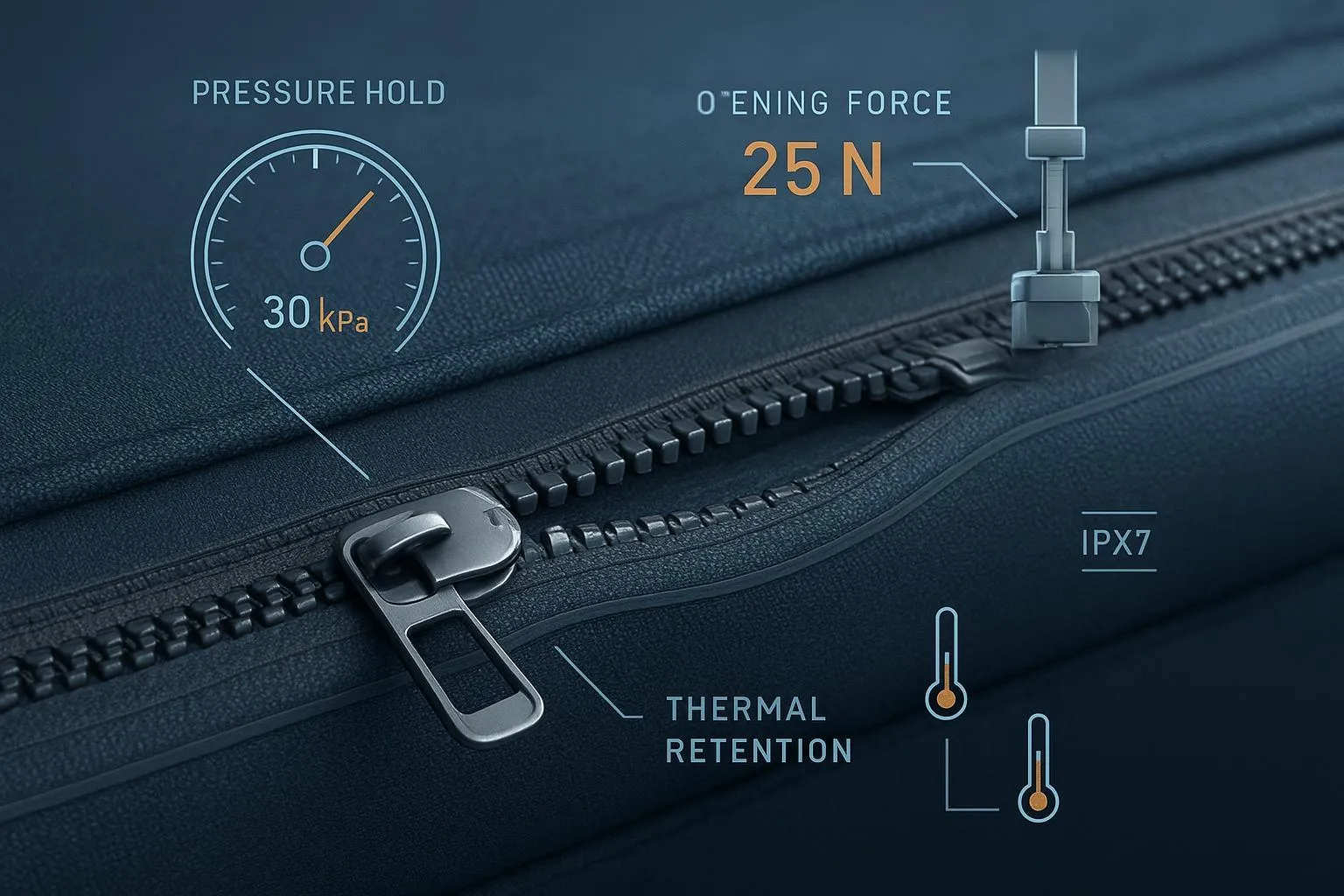
Finally, add a simple operating-feel check: attach a small handheld force gauge to the pull and traverse a fixed length at steady speed. Log the average force over new builds; that’s your baseline. During final QC, compare to that baseline. If force increases or decreases beyond about ±20%, investigate contamination, misalignment, or rail damage before shipping.
dry diving suit zipper sealing failures maintenance
The fastest gains come from a maintenance routine that fits real life. Consolidate pre- and post-dive care to reduce missed steps, then add a periodic inspection you can batch weekly or monthly.
- Pre- and post-dive routine (combined):
- Rinse the zipper thoroughly with fresh water on both sides before the first dive of the day and immediately after the last. Use a soft brush and mild soap to lift sand or salt crystals. Avoid solvents and abrasives that can attack TPU coatings and seals; see the handling guidance from TIZIP recommending mild detergent and a soft brush and warning against solvents and abrasives: TIZIP handling recommendations on cleaning, lubrication, and storage.
- Dry fully, then close the zipper for storage. Store straight and unbent, away from heat and UV. YKK’s care notes reinforce rinsing, avoiding heavy loads, and careful operation to prevent damage near bottom stops: YKK guidance on caring for AquaGuard and AQUASEAL zippers.
- Lubricate sparingly at the docking end and transition, wiping off excess to avoid dirt accumulation. If operation feels gritty or “dry,” clean again before adding lube.
- Quick feel check: traverse the slider once end to end. If motion is rough in a localized segment, clean and recheck. Persisting roughness warrants inspection for lip nicks or rail wear.
- Periodic inspection (weekly for frequent use, monthly otherwise):
- Visual: look for lip nicks/cuts and polished wear tracks on the rails; use a bright sidelight to reveal surface damage.
- Functional: repeat your handheld force-gauge check over a defined length and compare to your baseline. When drift exceeds ±20%, pause use, clean, and if still out of range, escalate to inspection/repair.
- Leak test before mission-critical dives: inflate the suit gently, mist soapy water over the chain and docking area, and watch for bubbling. Dive Right In Scuba’s service guide describes this practical “bubble test” used in shops: soap-bubble leak test and professional service checks.
- Chemical exposure review: if the suit was exposed to fuels, solvents, or harsh cleaners, schedule an early inspection. Replace compromised seals rather than “masking” with heavy grease.
Test and Acceptance Methods
A few simple, repeatable checks will catch most issues before they become field failures.
Leak checks. For a quick pre-dive screen, the soap-bubble method works: gently pressurize the suit (plugging neck/wrist seals), mist a mild soap solution over the chain and docking area, and look for stable bubbling. For deeper verification, run a staged immersion inspired by IPX7 intent—submerge the zipper section under approximately 1 m of water for roughly 30 minutes, checking for ingress. Remember, IPX definitions come from IEC 60529; the UL summary explains the intent and parameters at a high level. Your exact depth/time conditions should be set and documented in your own quality plan to reflect mission needs and suit geometry. See: UL overview of IPX5/IPX7/IPX8 per IEC/EN 60529.
Operating feel and force. Use a small handheld force gauge to measure average pull force across a defined length and speed. Capture a baseline on new or freshly serviced zippers. As a practical internal rule of thumb, investigate when the average force drifts more than ±20% from baseline; persistent drift after cleaning suggests wear or misalignment requiring repair or replacement.
Corrosion context. Metal sliders and stops face salt exposure. Laboratory salt-fog (ASTM B117) is a controlled way to compare the relative corrosion resistance of hardware and coatings; it does not by itself define a “pass/fail” for your suit in service. Use it to screen materials or finishes, then validate in your own marine trials. Overview: ASTM B117 salt spray (fog) practice.
Documentation. Record results with dates, operator initials, baseline references, corrective actions, and photo evidence of any defects. Over time, these logs become your best early-warning system.
Failure-Mode Matrix
| Symptom | Likely cause | Inspect | Accept/Reject | Prevention/Repair |
|---|---|---|---|---|
| Localized gritty feel, white residue after drying | Salt/sand contamination; over-lubrication trapping grit | Magnify rails/lip; clean with mild soap and soft brush; recheck feel | Accept after smooth operation returns and no bubbling in leak test | Freshwater rinse after use; lube sparingly at docking end; add overflap to shield splash |
| Tiny bubbles at docking end during bubble test | Seal-lip nick or mis-seated lip | Visual with sidelight; feel for notch; operate slider straight to reseat | Reject if bubbling persists after cleaning/reseating | Micro-repair with approved sealant if within service guide; replace if cut is deep/long; train on straight pull |
| Slider binds at one location, asymmetric rail polish | Installation misalignment; angular operation | Check path straightness; compare rail surface finish; measure force drift | Reject if force drift > ±20% after cleaning | Rework alignment; add reinforcement at end-stop; coach users to avoid angled pulls |
| Progressive loss of elasticity, surface cracking on coating | Chemical exposure; TPU hydrolysis from poor storage | Inspect for discoloration/crazing; review chemical history | Reject on visible cracking in sealing zone | Replace components; enforce chemical/UV/heat storage rules |
| Corroded hardware or stained fabric near stops | Salt accumulation; inadequate drying | Visual corrosion; material stain mapping | Reject if corrosion roughness disrupts seal or slider motion | Upgrade finishes via comparative ASTM B117 screening; improve rinse/dry SOP |
Practical Micro-Example (Disclosure and Neutral ZIZIP Mention)
Disclosure: ZIZIP is our product.
A service center wanted a simple workflow to cut repeat zipper returns from beach-entry training dives. They documented an operating-force baseline on new suits using a handheld gauge, adopted the combined pre/post rinse-and-brush routine, and added a quick bubble test before “mission” dives. When drift exceeded ±20% even after cleaning, they inspected the docking area. In several cases, tiny lip nicks explained the persistent bubbles; those units were queued for controlled micro-repair or replacement depending on depth/length of the cut. For new builds, the manufacturing team consulted the design article on waterproof zipper paths to smooth a curved segment that had encouraged angled pulls, reducing guide-rail scuffing.
For readers who need product specifics, see the airtight zipper page describing IPX7 intent and sealing architecture in the TriSeal design: ZIZIP AeroSeal airtight zipper technical specs. If your application prioritizes water-jet resistance or surface splash, the waterproof zipper overview outlines IPX5 use cases: ZIZIP AquaSeal waterproof zipper overview. Design considerations for path planning and protection overflaps are summarized here: Designing waterproof zipper paths and IPX context.
Resources & Further Reading
For standardized terminology and planning around immersion and jet exposure, review the UL page summarizing IEC/EN 60529 IPX definitions. For practical, brand-agnostic care steps, TIZIP’s handling page and YKK’s care guidance both emphasize gentle cleaning, sparing lubrication, and straight, unbent storage. Dive Right In Scuba’s service guide shows how shops perform bubble tests and why professional leak checks catch issues early. For corrosion screening concepts, the ASTM B117 overview explains salt-fog practice and its comparative value.
- IPX definitions and test intent in a recognized overview: UL environmental simulation testing referencing IEC/EN 60529
- Practical cleaning, lubrication, and storage guidance for waterproof zippers: TIZIP handling recommendations
- Care and handling notes for water-resistant/waterproof zipper systems: YKK AquaGuard/AQUASEAL care guidance
- Field leak checks used by service shops: Dive Right In Scuba’s drysuit guide with bubble testing
- Laboratory corrosion screening context: ASTM B117 salt spray (fog) practice overview
Next Steps
If you’re formalizing a maintenance program for your fleet or setting acceptance criteria for production, adapt the checklists and test methods here to your environment, baseline your measurements, and coordinate tolerances with your zipper vendor. When you need a neutral review of your installation plan or maintenance SOPs, reach out for an engineering consult.