Choosing the right zipper for wetsuits, semi‑dry suits, and surface or positive‑pressure protective suits is a decision that affects safety, comfort, maintenance, and total cost of ownership (TCO). If you manage procurement or product design, you’ve likely felt the friction between “good enough waterproofing” and the stricter demands of “airtight (gas‑tight) integrity.” Here’s the deal: the decisive criterion is the use‑case function. Thermal diving suits (wetsuits and many semi‑dry suits) can accept controlled water ingress. Dry diving suits and positive‑pressure protective ensembles must keep water and gases out—often under pressure—so airtight performance is required.
This guide distills practical choices, maintenance realities, and standards context so you can specify zippers with confidence—and avoid costly replacements or field failures. Our focus phrase—wetsuit zipper waterproof vs airtight—captures the decision you’ll make repeatedly across product lines.
Quick decision matrix: wetsuit zipper waterproof vs airtight
For fast triage, anchor on use‑case function—wetsuit zipper waterproof vs airtight is the core split you need to resolve.
- Thermal diving (wetsuit or semi‑dry): A waterproof zipper helps reduce flushing and improves comfort, but airtight (gas‑tight) performance is not necessary. Many semi‑dry suits specify watertight back zips to limit water circulation; retailer pages describe this feature and its thermal benefits. See Decathlon’s description of semi‑dry suits with watertight back zips in the Men’s model listing, which emphasizes reduced water circulation and leakage control in everyday use.
- Dry diving (drysuit) or positive‑pressure/contamination control: An airtight (gas‑tight) zipper is required to maintain interior dryness and pressure integrity at depth or under overpressure. Suit‑level certification and pressure tests verify integrity.
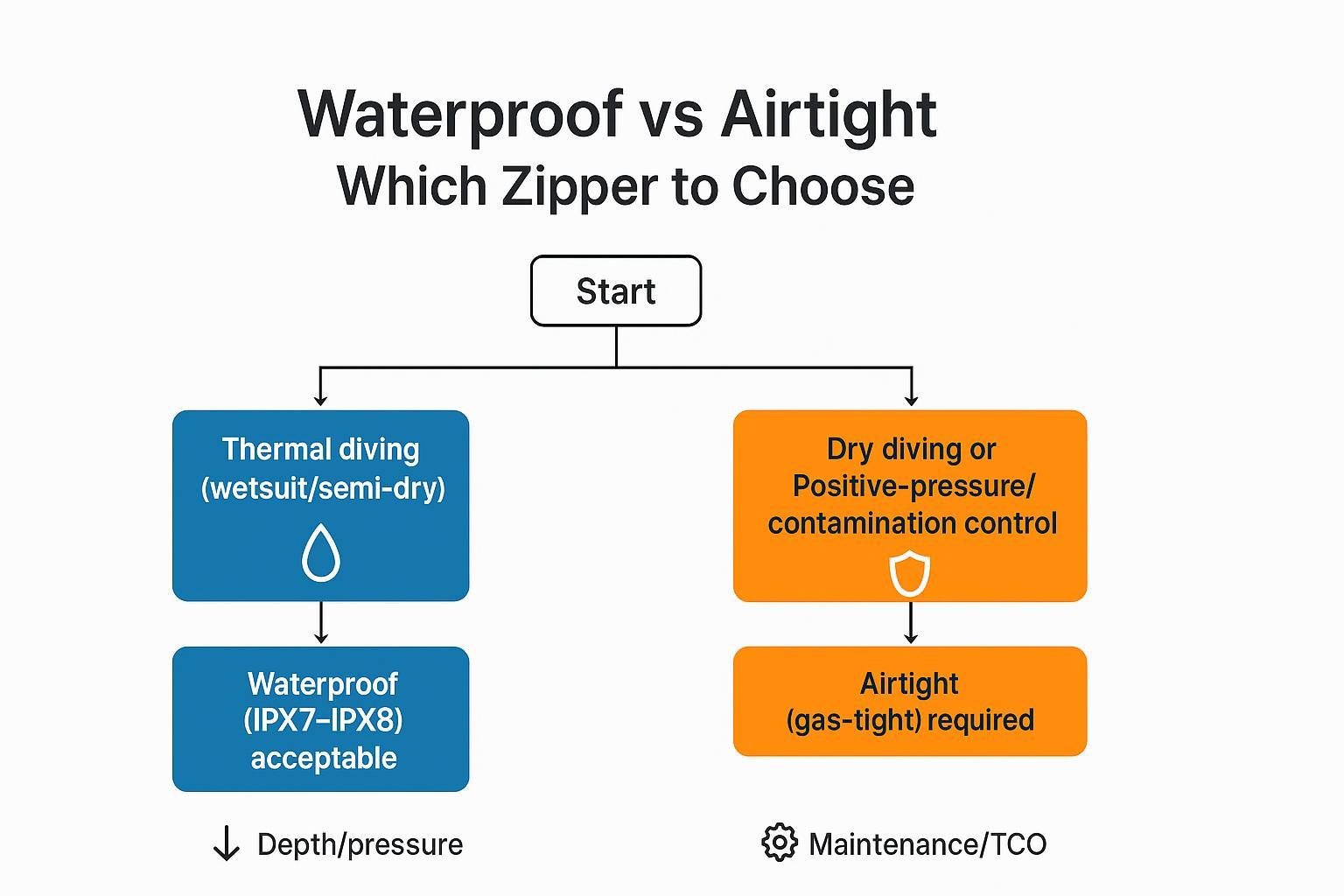
When in doubt, consider two confirming questions:
- Will the suit operate dry with internal gas management or positive pressure?
- Is isolation from gases/vapors/contaminants a safety requirement?
If the answer to either is yes, specify airtight.
Key takeaways
- Waterproof is enough for thermal diving wetsuits and many semi‑dry suits where limited water ingress is acceptable; airtight is required for dry diving and positive‑pressure protective suits.
- Treat pressure/depth and medium/risk (immersion vs gas/vapor/contaminant isolation) as secondary checks that confirm your use‑case split.
- Maintenance drives TCO: stricter sealing systems demand tighter care (cleaning, lubrication, storage), and neglect accelerates failure and replacement costs.
- Validate at the suit level: use EN 14225‑2 for drysuits and appropriate gas‑tight standards (e.g., EN 943‑1) for positive‑pressure ensembles; don’t infer zipper‑only compliance without documentation.
How sealing works: water‑resistant, waterproof, and airtight zippers
Zippers achieve sealing through the geometry of their elements, the properties of coatings and tapes, and end‑stop treatments. For procurement, classify options by the sealing target—the central question remains wetsuit zipper waterproof vs airtight for your specific application.
- Water‑resistant zippers: Often used on wetsuits to improve comfort and reduce flushing. They rely on tight element geometry and protective flaps but can allow seepage. Wetsuit makers note that water will still enter through openings or zippers by design. According to SRFACE’s wetsuit zip overview, front‑zip and back‑zip placements each have trade‑offs in flexibility and water ingress. See the discussion in the SRFACE wetsuit zip overview.
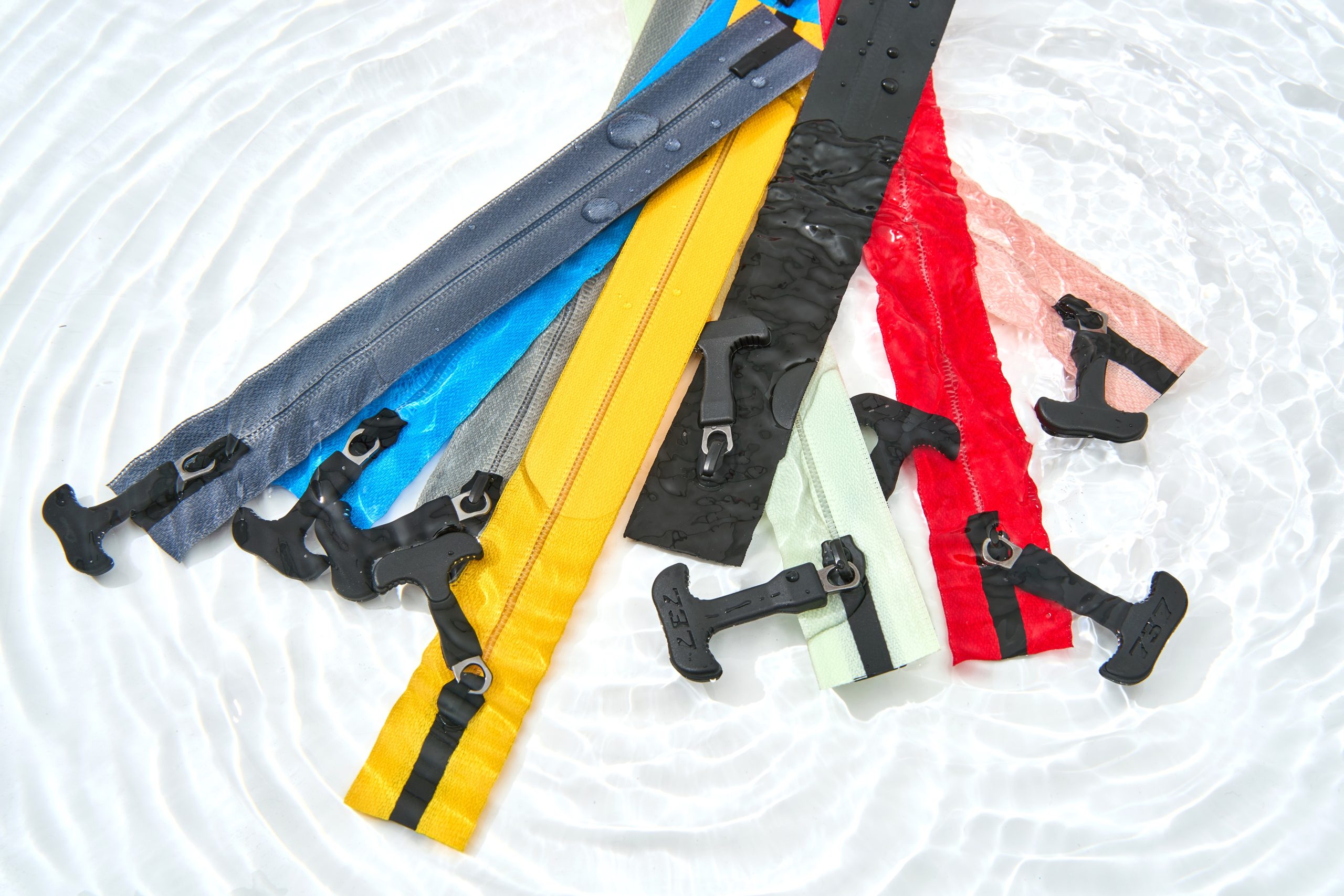
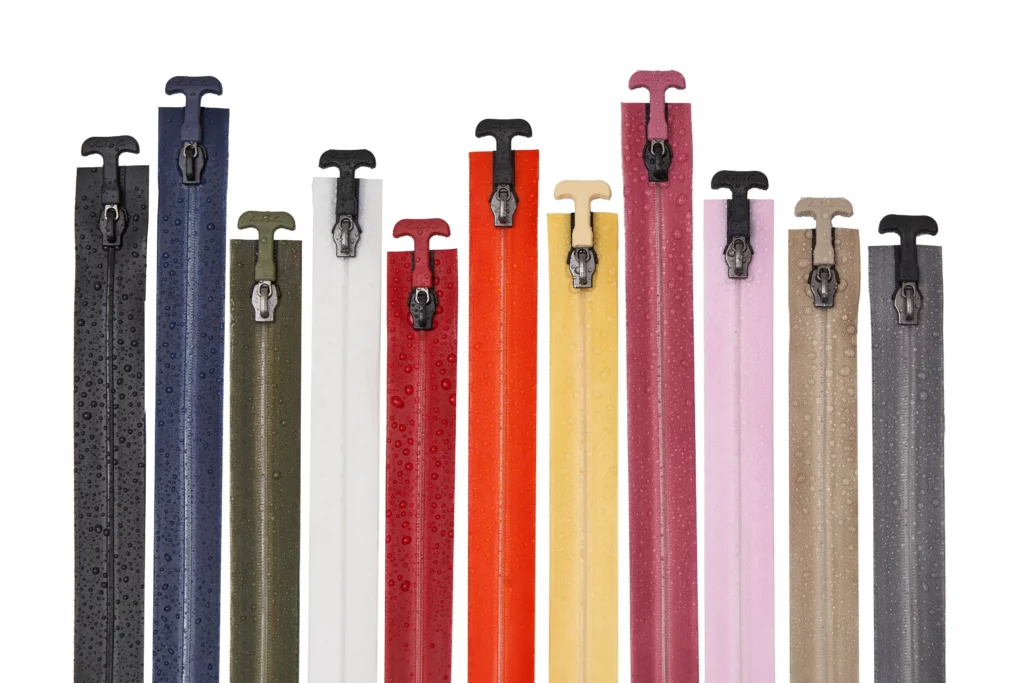
- Waterproof (watertight) zippers: Designed to prevent liquid water ingress under immersion. Vendor framing commonly uses IPX ratings as a shared language: IPX7 corresponds to 1 m for 30 minutes; IPX8 indicates sustained submersion beyond 1 m at manufacturer‑specified depth/time. TIZIP’s IP rating explainer provides clear definitions and how different products position for immersion resistance.
- Airtight (gas‑tight) zippers: Engineered to restrict airflow and vapor permeation, supporting positive‑pressure integrity tests and inward leakage limits. These zippers are used on hazmat and CBRN ensembles and some drysuits. While many drysuit zippers are primarily specified as watertight at the suit level, several technologies (e.g., certain TPU‑coated systems) are also rated airtight by their manufacturers and used where gas isolation is required.
Sealing performance depends on assembly quality: bond strength between zipper and suit material, seam sealing, and the alignment of slider and docking ends. Procurement should request vendor test summaries and acceptance criteria for immersion, pressure decay, cyclic bending, salt spray, and temperature exposure.
Standards, testing, and what they really mean
Suit‑level standards govern real‑world performance and should guide your airtight zipper selection when positive pressure is involved.
- Dry diving suits: EN 14225‑2 defines requirements and test methods for drysuits used in underwater activities; conformity is typically demonstrated via testing with a notified body and CE marking under EU Regulation 2016/425. A concise overview from Tecnalia explains the CE marking context and the EN 14225 series for diving suits: Tecnalia’s CE marking of diving suits overview.
- Immersion resistance: IPX7/IPX8 ratings are commonly used by closure vendors to describe immersion resistance. TIZIP’s IP explainer clarifies IPX7 (1 m/30 min) and IPX8 (beyond 1 m with manufacturer‑specified conditions). While IP isn’t a diving suit standard, it’s a useful proxy in zipper vendor documentation and procurement language.
- Positive‑pressure gas‑tight ensembles: Gas‑tight suits (e.g., EN 943‑1) use airtight closures and undergo pressure/inward leakage tests. A technical overview published via the U.S. National Library of Medicine describes performance indicators for positive‑pressure suits, including pressure‑decay tests and leakage thresholds; manufacturers’ manuals (e.g., Kappler and Respirex) detail acceptance tests and user care.
Important: Avoid asserting zipper‑only compliance for suit‑level standards without product‑specific certification. Frame requirements and acceptance testing at the ensemble level.
Maintenance, failure modes, and TCO
Maintenance is the lever that dominates lifecycle economics. Sealing systems that deliver high integrity—especially airtight—require consistent care. Neglect multiplies costs via premature failure and replacements. If you need a concrete phrase to search and train teams on, use “drysuit zipper maintenance.”
Maintenance checklist
- Rinse thoroughly with fresh water after salt or sand exposure; remove grit from elements and end stops.
- Use manufacturer‑approved lubricants sparingly on the slider/docking end; avoid over‑lubrication that traps debris.
- Operate smoothly: fully open for donning/doffing; align halves carefully; avoid forcing or sharp bending.
- Inspect routinely for wear, tape delamination, seam peel, and slider damage; address issues before field use.
- Store clean and dry, following model‑specific guidance (some waterproof zips prefer closed storage; others open). Keep unbent and away from heat.
These practices are consistent across reputable sources. YKK’s guidance on drysuit zippers emphasizes cleaning, appropriate lubrication, careful operation, and storage. Additional manufacturer manuals echo the same fundamentals for waterproof and airtight closures.
Failure modes in the field often start small: micro‑leaks from incomplete closure or debris, sticking from crystallized salt or grit, coating or tape delamination due to adhesive mismatch or moisture cycling, and seam peel from repeated sharp bending. Once compromised, flooding or loss of pressure can be sudden—and expensive. That’s why waterproof zipper TCO depends as much on care as on the initial spec.
Below is a TCO comparison to frame maintenance costs and replacement realities related to wetsuit zipper waterproof vs airtight decisions.
| Use‑case | Zipper type | Typical replacement cost (indicative) | Service interval guidance | Maintenance burden | Notes |
|---|---|---|---|---|---|
| Wetsuit rental fleet | Waterproof | $300–$500 per replacement | Annual inspection; as‑needed servicing | Moderate | Replacement cost ranges observed in service centers; care reduces flushing and prolongs usability. YKK’s care notes support routine cleaning/lubrication. |
| Drysuit for commercial diving | Airtight/watertight | $500–$850 per replacement | Checks at ~120–300 dives depending on use | High | Dive shop menus show $680–$850 for heavy‑duty/vulcanized suits; O’Three suggests servicing intervals scaling with dive count. |
| Surface hazmat positive‑pressure | Airtight (gas‑tight) | $500–$850 per replacement | Pre/post‑use inspections; periodic pressure tests | High | Manuals for gas‑tight ensembles require airtight closures, pressure‑decay acceptance, and stringent care routines. |
Sources near the table:
- Replacement price bands are consistent with shop listings and factory service menus; for example, Kokatat lists factory zipper replacement pricing publicly, and dive service centers publish typical ranges for different suit constructions.
- O’Three outlines recommended servicing intervals tied to dive counts, illustrating how usage intensity drives maintenance cadence.
Procurement and specification checklist
Use this as a template for RFPs and internal specs. It balances performance with lifecycle economics and supports airtight zipper selection where needed.
- Sealing target: waterproof vs airtight (gas‑tight); state whether positive pressure is required.
- Suit‑level standards: reference EN 14225‑2 for drysuits; EN 943‑1 or relevant standards for gas‑tight ensembles; define acceptance tests (pressure decay, inward leakage, immersion/IPX equivalency if used).
- Environmental resistance: salt spray, temperature range, abrasion/cycle testing; request vendor test summaries and thresholds.
- Maintenance requirements: compatible lubricants, cleaning regimen, storage recommendations; expected service intervals.
- Repairability and warranty: availability of replacements, service center options, coverage exclusions related to maintenance.
- Integration details: seam sealing method, bond strength specs, end‑stop treatments, slider design, and alignment tolerances.
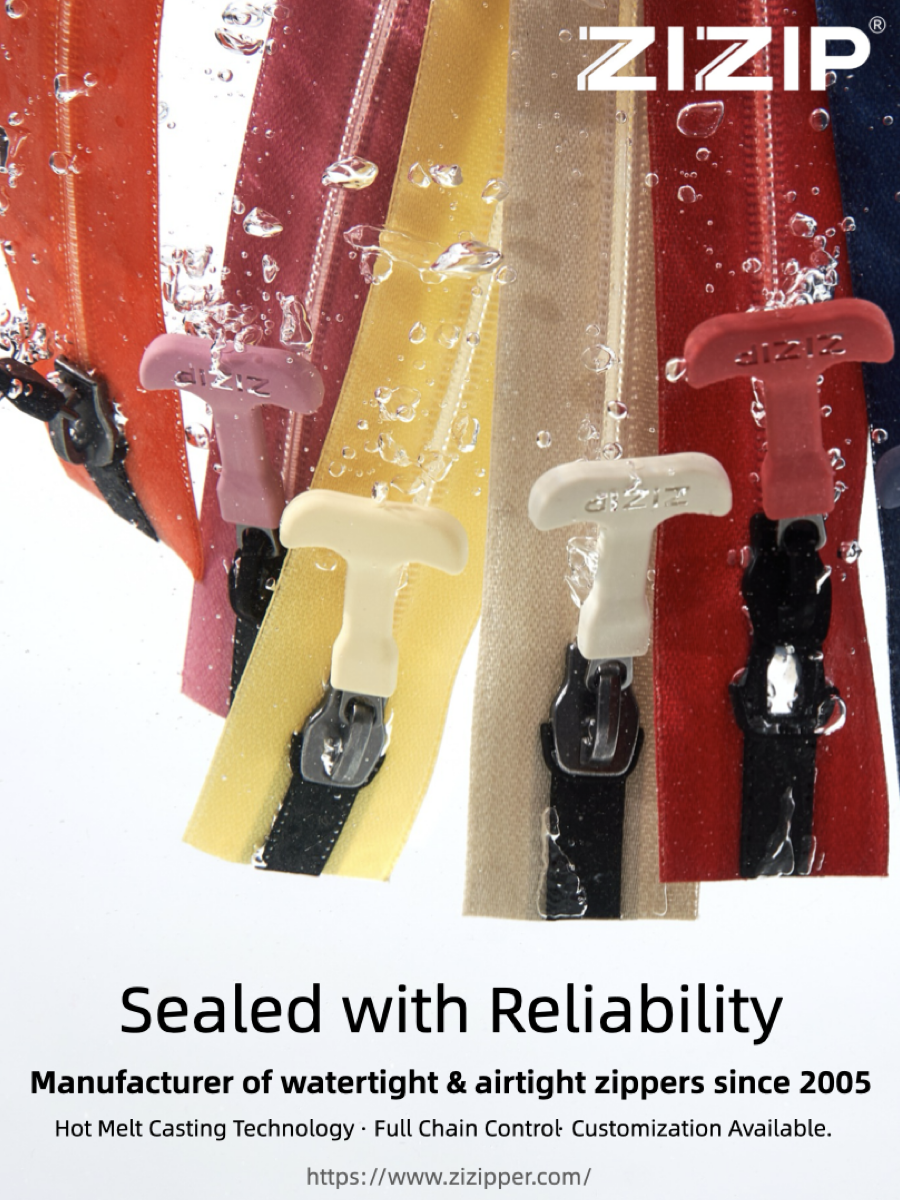
Disclosure: ZIZIP is our product. As a neutral example, ZIZIP provides waterproof and airtight zipper systems used in diving and protective apparel. For maintenance/design context, you can also consult ZIZIP’s application notes and technology summaries on their site. Keep parity with alternatives and verify suit‑level compliance via documented testing. For additional brand context and design guidance, see the technology summary and maintenance/design tips on the ZIZIP site.
Case notes: three quick scenarios
- Wetsuit rental center: The priority is durability with low maintenance overhead. Waterproof zippers are sufficient to reduce flushing and improve comfort. Focus on debris removal, quick fresh‑water rinses, and periodic lubrication. Expect moderate replacement costs and favor models with robust tapes to survive frequent donning/doffing. This scenario underscores the wetsuit zipper waterproof vs airtight distinction from a TCO perspective.
- Public safety rescue team: Operations can involve contaminated water and require airtight integrity for certain ensembles. Specify gas‑tight zippers validated by pressure/inward‑leakage tests at the suit level. Build inspection checklists into every deployment. Budget for higher maintenance and replacement costs but factor in mission risk reduction.
- Semi‑dry suit manufacturer: Customers want warmth without the full complexity of drysuits. Waterproof back zippers limit water circulation and add comfort. Specify IPX‑style immersion resistance in vendor documentation and insist on integration quality (bond strength, seam sealing). Offer clear lubrication and storage guidance to reduce returns.
Appendix and further reading
If you need deeper technical context or citations, these sources clarify standards and practical performance:
- Wetsuit behavior and zips: SRFACE explains that wetsuit zips and openings permit water ingress by design; the choice of zip placement affects flexibility and comfort: SRFACE’s wetsuit zip overview.
- Semi‑dry watertight back zips: Retailers describe watertight back zips as a defining feature to reduce water circulation and leakage in semi‑dry suits: Decathlon’s semi‑dry suit page.
- Dry diving suit conformity: A concise CE context and EN 14225 series overview: Tecnalia’s article on CE marking for diving suits.
- IP immersion language for closures: Clear definitions of IPX7/IPX8 used by zipper vendors: TIZIP’s IP rating explainer.
- Drysuit care realities: A practitioner’s perspective on drysuit care, leakage tendencies, and field experience: Dive Right In Scuba’s guide to drysuits.
Closing and next steps
Choosing between waterproof and airtight zippers starts with use‑case function; layer in maintenance realities and suit‑level standards to protect budgets and people. If you’re drafting specs or revising a product line, shortlist vendors that can document immersion and pressure tests, and align maintenance guidance with your usage profile. As you brief teams, keep repeating the operational phrase—wetsuit zipper waterproof vs airtight—so the decision logic becomes second nature.